
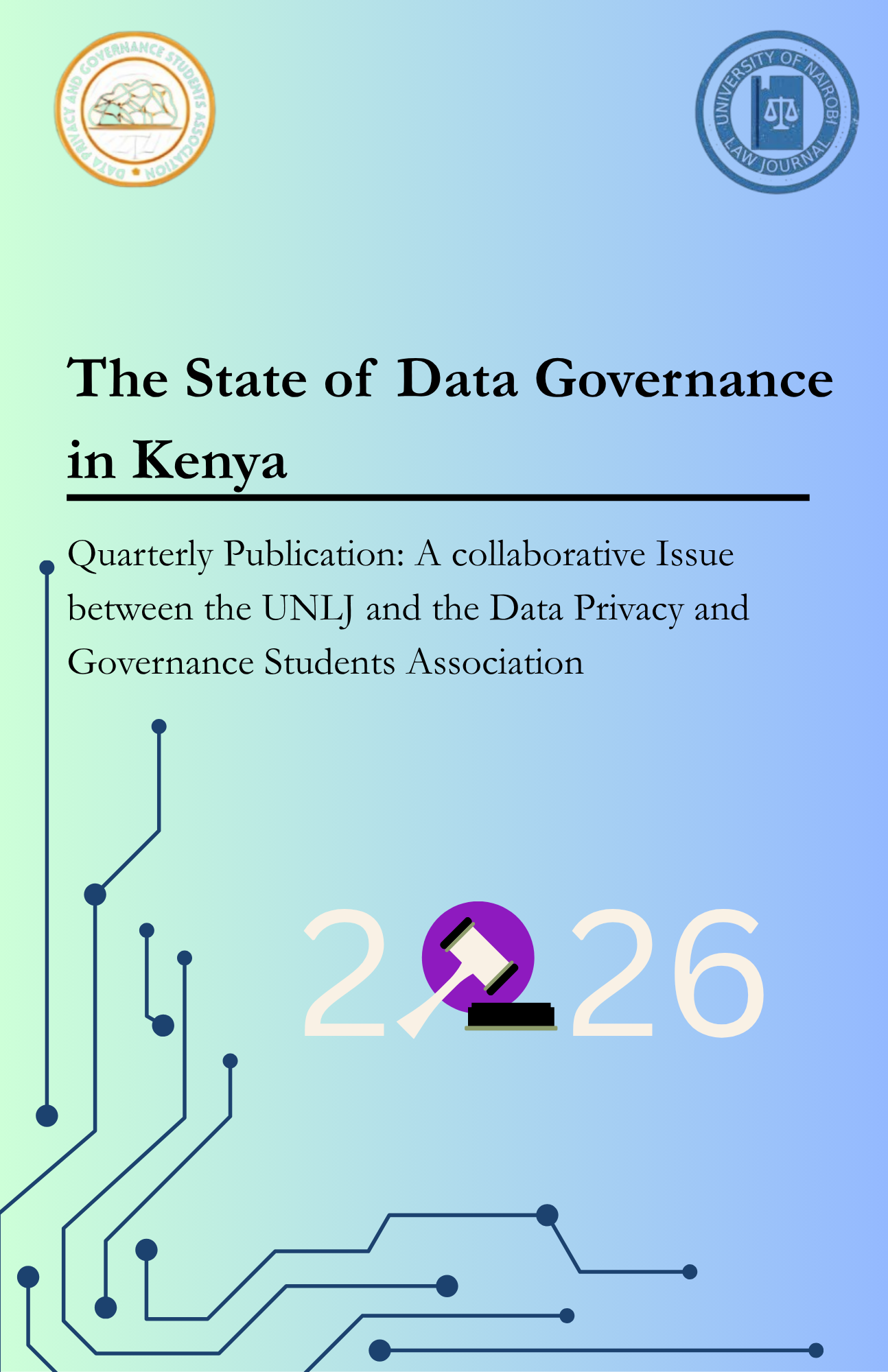
A critical Analysis of the Data Governance and Regulatory Efficacy under the Kenya Data Protection Act
DOI:
https://doi.org/10.66563/t3630e93Abstract
At this point in time of writing this article (January of 2025); it is remarkable, the strides human- kind has been able to make technologically from when we can trace our inception in this world. Strikingly, our dependency on technology is somewhat critical to our survival as we move forward.Notably, as technology continues to pervade human life, one inherent feature comes to the fore. To expound on this, human data is key in functioning of technology. From simple gadgets as our handsets, we are required to register our identity to our network providers in order to enjoy day- to-day usage. On our social interaction platforms, our names and profile photos, including addresses are requisite for identification. In workplaces, our data attributing educational backgrounds, achievements and work experiences are stored. In healthcare, data concerning our biological make up is recorded. Governments on the other hand have identification of its citizens from birth to death. From these few examples, we can reckon how much human data is augmented with the technological ecosystem.
Juxtaposed with the highlight above, the basis of this article is on the ironical end of human inclination to privacy. It is axiomatic that human beings at an individual level need and ought to have control of their personal matters and personal information. Control and consent on what the public should be able to know about individuals lies on the person. This is what informs data privacy and governance in Kenya.
References
Published
Issue
Section
License
Copyright (c) 2026 University of Nairobi Law Journal

This work is licensed under a Creative Commons Attribution-NonCommercial-ShareAlike 4.0 International License.
© Copyright
University of Nairobi Law Journal. All rights reserved. No part of this publication may be reproduced, stored in retrieval system or transmitted in any form or by any means, electronic, mechanical or photocopying, recording, or otherwise without the prior permission of the University of Nairobi Law Journal.
The University of Nairobi Law Journal believes in the strength of due diligence exercised, that this work does not contain any material that is the subject of copyright held by another person. In the alternative, they believe that any protected pre-existing material that may be comprised in it has been used with appropriate authority or has been used in such circumstances that make such use permissible under the law.
Although every care is taken to ensure the accuracy of this publication, supplements, updates and replacement material, the authors, editors, publishers and printers do not accept responsibility for any act, omission, loss, damage or the consequences thereof occasioned by a reliance by any person upon the contents hereof.


